

Choosing the right solar inverter depends on more than the product label. An inverter converts electricity from solar panels or batteries into the form most appliances use, but buying one alone won’t tell you which appliances it can run or how long they’ll stay on during an outage. Those answers depend on the complete system, including its power sources, battery storage and your energy use.
It can be difficult to compare inverter specifications or know whether an inverter by itself can keep a home or business running. This guide explains what an inverter does, how common types differ and what to consider when choosing a system for your needs in Nigeria.
You’ll learn how grid-tied, off-grid and hybrid inverters work, and how hybrid inverters can coordinate power from solar panels, batteries and the grid. You’ll also see how to plan around the details that shape system design: which appliances matter most, how much power they need and how long you want backup to last.
Key Takeaways
- A solar inverter converts electricity from solar panels or batteries into power appliances can use.
- Compare grid-tied, off-grid and hybrid systems by how they connect to the grid and the backup they’re designed to provide.
- Inverter capacity alone doesn’t determine backup time. Battery storage and the appliances you run also matter.
- Start planning by listing essential appliances, estimating how long you use them and noting your typical outage duration.
- SolariQ designs and installs systems for homes and businesses, and provides after-sales servicing. Its products and services are covered by a five-year warranty.
What Is a Solar Inverter, and What Does It Do?
A solar inverter converts the direct current (DC) electricity produced by solar panels into alternating current (AC) electricity that most household and business appliances use. Panels generate power in sunlight, but that electricity must be converted before it can run equipment designed for a standard building circuit. The inverter performs that conversion.
Consider a ceiling fan or refrigerator. These appliances connect to an AC power circuit, so panel output can’t flow directly to them as DC. The inverter converts the electricity, and the system then sends it to the appliance. This conversion is central to how a solar inverter works. Depending on the equipment, the inverter can also form part of a system that manages other power sources.
What does a solar inverter convert?
Direct current flows in one direction, and solar panels produce DC electricity. Alternating current changes direction repeatedly and is the form supplied to most household and business circuits. Some appliances, including fans and refrigerators, use AC to operate. Electronics may convert AC internally for their components, but the building circuit still supplies AC.
The inverter’s main job is to convert panel-generated DC electricity into usable AC power for appliances.
For example, sunlight reaches rooftop panels, which generate DC electricity. The electricity travels to the inverter, which converts it to AC. The system then directs that power to a fan or another connected load. The inverter converts electricity; it doesn’t create sunlight or store energy by itself.
What else may a complete solar system need?
An inverter is one part of a solar setup, not a complete power system on its own. Panels generate electricity, the inverter converts it, and energy storage can hold power for later use. A system may also include solar accessories to connect and support its components. The right arrangement depends on the equipment and how the system is designed.
Storage is important if you want to use solar energy when the panels aren’t generating, such as after sunset or during an outage. In a system with a compatible battery, stored energy can pass through the inverter to run connected appliances. Without storage, an inverter doesn’t automatically provide backup power when solar generation stops.
Picture a home with panels, an inverter and a compatible battery. During the day, the panels can supply power to appliances, while the system may also store energy for later. At night, the battery can supply stored power through the inverter. The setup needs to match the household’s power needs and backup expectations; systems don’t all use the same components or arrangement.
This distinction makes product specifications easier to interpret. The inverter changes electricity into a usable form, while panels and optional storage affect how power is generated and when it’s available. SolariQ designs and installs solar systems for homes and businesses around their power needs and expected outage duration.
How Does a Solar Inverter Work With Panels, Batteries, and Loads?
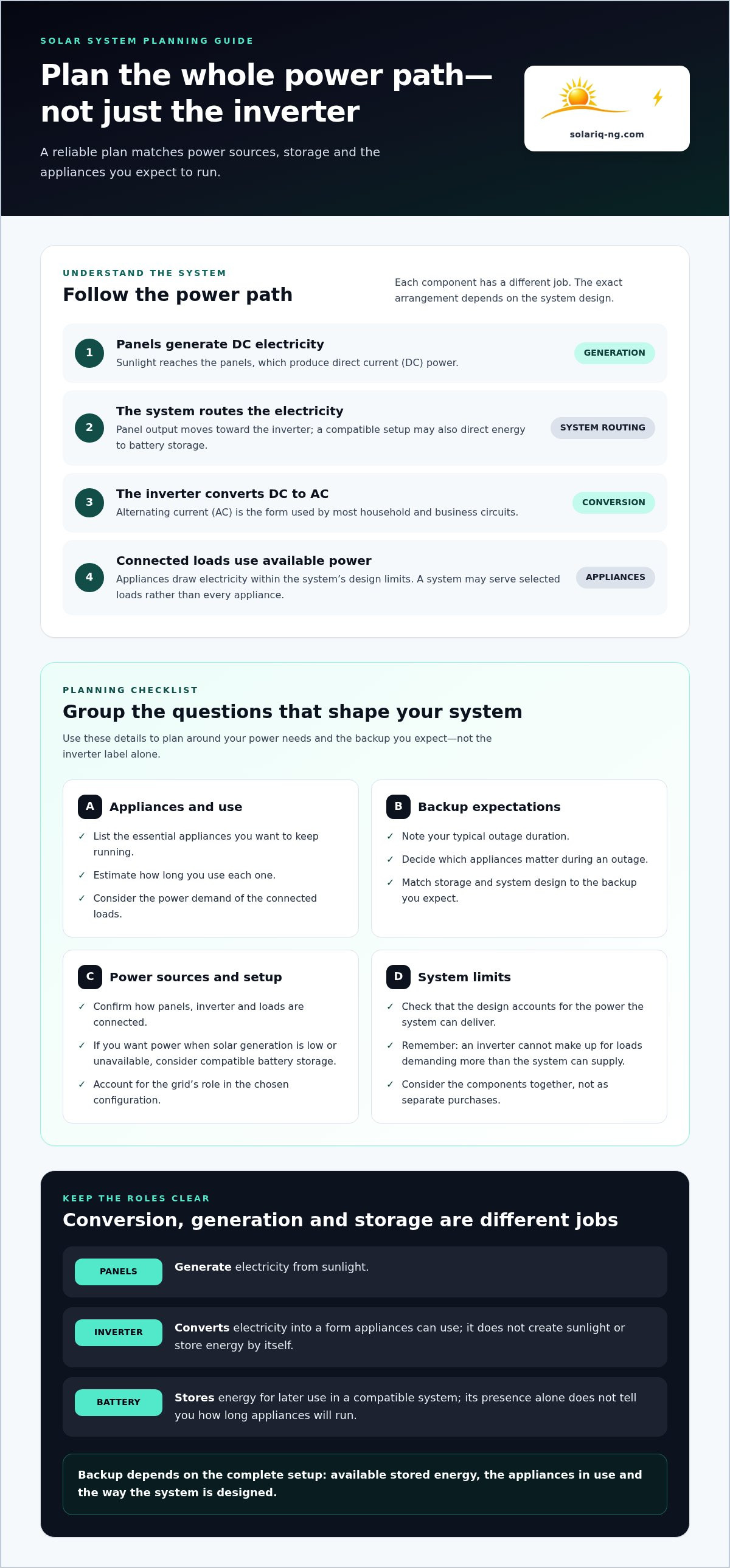
Follow the power path to understand how the equipment works together. Panels generate electricity, the inverter converts or directs it in a usable form, and connected appliances draw power within the system’s design limits. The precise flow depends on the components and how they’re connected.
From sunlight to usable household electricity
The basic sequence is straightforward, although the system design determines the exact arrangement.
- Panels receive sunlight. Solar panels use sunlight to generate direct current (DC) electricity.
- Electricity moves through the system. The setup routes panel output toward the inverter. If compatible batteries are included, the design may also direct energy to storage.
- The inverter converts power. It changes DC electricity into alternating current (AC) for connected circuits and appliances.
- Loads use available power. Connected appliances draw electricity within the system’s design limits. These might be selected lights and office equipment, rather than every appliance on the property.
In short, panels generate DC power, the inverter converts it to AC, and connected loads use the available electricity.
System limits matter. The design must account for how much power it can deliver and which appliances it serves. If connected loads demand more than the system can supply, the inverter can’t make up the difference on its own. Treat the components as parts of one plan, rather than selecting separate purchases without considering how they’ll work together.
How batteries and the grid fit into the system
Conversion and storage are separate functions. The inverter converts electricity, while a battery stores energy for later. If compatible batteries are part of the system, stored energy may be supplied when solar generation is low or unavailable. The amount of power available depends on the system configuration and the energy stored.
For example, during daylight, panels may supply connected loads while the system stores energy in a battery. Later, stored energy may pass through the inverter to serve selected appliances. A battery doesn’t generate electricity, and its presence alone doesn’t tell you how long equipment will run. Both the available energy and the loads in use matter.
The grid’s role also varies. Some configurations connect to the grid, while others are designed to operate without it. A hybrid setup can coordinate more than one power source, but its behaviour depends on the equipment and design. Don’t assume every system provides the same backup during an outage.
Good system design brings panels, storage, inverter and loads together around actual power needs and expected outage duration. SolariQ’s solar system design and installation connects those decisions with the equipment selected for the project.
Solar Inverter Types Compared: Grid-Tied, Off-Grid, and Hybrid
Choose an inverter type based on how you want your home or business to use power. Should the system work alongside the electricity grid, operate independently, or coordinate solar, battery and grid power? Each approach serves a different purpose, and none is automatically right for every property.
Use the comparison below as a starting point. Actual capabilities depend on the equipment selected and how the complete system is designed.
| Type | Purpose | Grid relationship | Backup expectations | Typical use context |
|---|---|---|---|---|
| Grid-tied | Use solar power alongside grid electricity | Connected to the grid | A grid connection alone doesn’t mean power will be available during an outage. Backup depends on system design and equipment. | Properties that want solar generation while remaining connected to the grid |
| Off-grid | Supply power independently | Designed to operate without a grid connection | Depends on available generation, storage and connected loads. | Properties planned around independent solar power |
| Hybrid | Coordinate solar with battery storage and grid power | Can work with the grid, depending on configuration | Backup depends on compatible storage, system settings and the loads selected. | Properties seeking a flexible setup that brings together multiple power sources |
When does a grid-tied or off-grid approach fit?
A grid-tied setup may suit a property that wants to use solar while keeping its grid connection. But a standard grid-tied arrangement shouldn’t be assumed to power appliances during an outage. Some systems are designed to stop supplying power when the grid goes down; backup requires specific equipment and a suitable design.
An off-grid system is planned to work independently. Its generation and storage need to support the loads it serves. This approach may suit a property without a grid connection or one planned for independent operation. It still doesn’t mean every appliance can run at any time. Available power and stored energy determine what the system can supply.
What makes a hybrid inverter different?
A hybrid setup can coordinate solar, storage and grid power, depending on its design. This can suit a household or business with changing power needs through the day, or one that wants to use solar and have stored energy available. The word “hybrid” alone doesn’t explain how the system behaves during an outage. Connected equipment and configuration matter.
SolariQ supplies hybrid inverters and designs solar systems for homes and businesses around their power needs and expected outage duration. When comparing options, focus on the full system’s intended operation, not just the inverter category. This overview compares the main approaches; a dedicated hybrid inverter guide can cover model-level selection and purchasing details.
How to Choose a Solar Inverter for Your Power Needs
A higher inverter capacity doesn’t automatically mean longer backup. Capacity relates to how much power the system can deliver to connected appliances at a given time. Backup duration also depends on available stored energy, the loads you run and how the system uses solar, battery and grid power. Choose the complete system around your needs, not the label on one component.
Start with appliances and expected outage duration
First, identify what you need to keep running. Separate essential appliances from occasional or non-essential ones. A home might prioritise lights, a refrigerator and internet equipment, while a business may focus on selected work equipment. Those priorities form the starting point for system planning.
Use this four-step checklist:
- List essential loads. Write down the appliances or equipment you want powered during an outage. Put optional loads on a separate list.
- Estimate use. Record the power information on each appliance’s label or documentation, along with the hours you expect to use it. Note which items may run at the same time.
- Note outage duration. Describe how long you want essential loads to run when grid power is unavailable. A short interruption and a longer outage call for different planning priorities.
- Define priorities. Decide which appliances must stay on, which can be used less and which can be switched off during an outage.
This list makes the trade-offs clearer. If you want more appliances running for longer, the system needs to be planned for that demand. If you mainly need to keep a few essentials going, the design can focus on those loads instead. Don’t assume every appliance needs to run at once.
Turn your needs into a system design brief
Bring the details together: your essential-load list, usage patterns, expected backup duration, power priorities and available installation space. Roof conditions also affect where solar panels can go. These details help connect the inverter choice with the panels, storage and appliances the system is meant to serve.
A mismatch between the loads you expect to run and the system design can limit performance. An inverter label alone won’t show how long stored energy may last or whether the setup suits your daily routine. Detailed battery calculations and installation checks are separate steps, but the starting point is a realistic account of your needs.
A system-level assessment is more useful than choosing by inverter label alone. SolariQ designs systems for homes and businesses around power needs, expected outage duration and roof conditions. Plan your solar system with SolariQ using a clear brief, so the equipment and installation are considered as one project.
How SolariQ Designs, Installs, and Supports Solar Inverter Systems
A solar setup starts with how you use power, not with a model name. SolariQ designs and installs systems for homes and businesses around their power needs and expected outage duration. That keeps the inverter in context: it needs to work with the other equipment and the loads the system is planned to serve.
What to expect from system design and installation
Begin with the practical details of the property. Which appliances or business equipment matter most? How long do you want essential loads supported during an outage? What roof conditions affect panel placement? These details help shape a system design around the site and the way you expect to use power.
The chosen inverter is one part of that plan. Solar panels, batteries where included, accessories and connected loads need to be considered together. SolariQ sells solar equipment and provides professional installation as connected parts of the project. This avoids treating the inverter as a standalone purchase with no clear relationship to the rest of the system.
For example, a household that prioritises lighting and refrigeration may have different design needs from a business that wants selected work equipment available during outages. Make those priorities clear in the design brief. Include the expected outage duration and roof conditions, so the plan reflects both the property and its power needs.
Equipment specifications and project details depend on the system being designed. Start with a clear account of what needs power, when it needs power and how long you want backup to last. SolariQ uses those requirements to plan the system components and installation.
What happens after installation?
Installation is not the only part of owning a solar system. SolariQ provides after-sales servicing and support for systems after installation, giving homeowners and businesses ongoing support for system care.
SolariQ’s products and services are covered by a five-year warranty. Refer to the warranty information provided with the project for the specific scope and terms.
A solar inverter system is a combination of equipment, design and installation. A suitable plan brings those parts together around your needs, rather than relying on a label or a one-size-fits-all setup. After-sales support is also part of owning the installed system.
If you’re planning power for a home or business, share your priorities and expected outage duration with SolariQ. Explore SolariQ’s solar solutions and plan a system around your needs.
Turn Your Power Priorities Into a Clear Plan
Your next step doesn’t need to be choosing a model from a list. Start by deciding what you need to keep running at home or work, and how long you want essential appliances supported during an outage. That gives the solar inverter decision a practical purpose and keeps planning focused on what matters.
You don’t need to arrive with technical answers. A clear idea of your priorities is enough to begin shaping a system plan. From there, it’s easier to compare options based on the loads you need to run and the backup you expect. A considered decision is more useful than a rushed purchase.
SolariQ can turn your requirements into a solar system plan for your home or business. Talk to SolariQ about a solar system designed around your power needs.
Frequently Asked Questions
What does a solar inverter do?
A solar inverter converts electricity from solar panels into a form that a property’s circuits and appliances can use. For example, it converts panel output so a connected television or office computer can receive power in the form it needs. The inverter also works as part of the wider system, so its role depends on how the equipment is connected. It doesn’t generate sunlight or store energy on its own.
Can a solar inverter work without batteries?
Yes, some solar systems operate without batteries. A grid-connected setup can use solar power as it is generated, with the grid as part of the arrangement. Without storage, solar energy generally isn’t available from the panels after sunlight stops. A battery-free system also doesn’t automatically provide outage backup. If backup matters, the system must be designed to supply power during a grid failure.
What is the difference between a hybrid and an off-grid inverter?
A hybrid inverter is used in a system that can coordinate solar, battery storage and grid power, depending on its configuration. An off-grid inverter serves a system designed to operate independently of the grid. For example, a property without a grid connection needs a design based on its own generation and storage. The right fit depends on the property’s power sources and backup goals.
How do I know what size solar inverter I need?
Size the inverter around the appliances you expect to run at the same time, not just the total number of items in the property. Check each appliance’s power information, then identify equipment that may draw a brief higher level of power when starting, such as a refrigerator. Include those details and your backup priorities in a system assessment. Battery capacity and expected run time are separate design considerations.
Can a solar inverter power a whole house?
It can power a whole house only if the system is designed for the home’s combined demand and intended use. A household might choose to run most appliances or focus on essential circuits such as lights, refrigeration and internet equipment. Appliances with higher power needs can affect the system design. Be clear about which loads should operate together rather than assuming every outlet will be backed up.
Does a solar inverter work when there is no grid power?
It depends on the inverter type and system design. Some grid-tied systems stop supplying power during an outage, even if panels receive sunlight. A backup-capable setup may serve selected loads if it includes the required equipment and is configured for that purpose. Off-grid systems are designed to operate without a grid connection. Confirm which circuits the system is intended to supply during an outage.
How long does a solar inverter last?
There isn’t one lifespan that applies to every inverter. Operating conditions, installation quality, maintenance and the specific equipment all affect how long it performs. Use the manufacturer’s documentation for its expected service life and care instructions, and keep records of installation and servicing. If performance changes, note the symptoms and when they began. That information can help guide a system assessment.
